by Dinja van Gestel
Difficult times reveal people’s true colours. Or so we say. In any case, it is a time when we get to know ourselves “differently”. After all, we develop our self-knowledge through encounters with the world around us. Without the world, there is no “me”. When the world shifts, something shifts within our “me”.
How are these times affecting you? It’s interesting to think about. How did you respond to change? A crisis is a great opportunity to increase your self-knowledge. To deepen it. You learn how you respond to stress and change. And now that you’re getting used to change, but there’s still a new world around you, it also offers opportunities to look at your talent in a different way.
Stress
You may have reacted with stress at the beginning of this crisis. At least, that’s how it works for most people. The basic patterns of freeze, fight, flight. You know them well. With collective “stress” like this, it’s usually not the case that you have only one reaction. Different “parts” of you can react differently. It just depends on who is at the wheel. Often there is a dominant “self” that takes the lead. It is interesting, based on Hal & Sidra Stone’s theory of “Psychology of Selves” (represented in the Netherlands by Robert Stamboliev’s ITP), to pay attention to which parts of yourself are awakening during this extraordinary time. I can illustrate this based on my personal experiences. How did I respond to the crisis, or rather, ‘which selves came to the fore in my response to the crisis over the past few months?
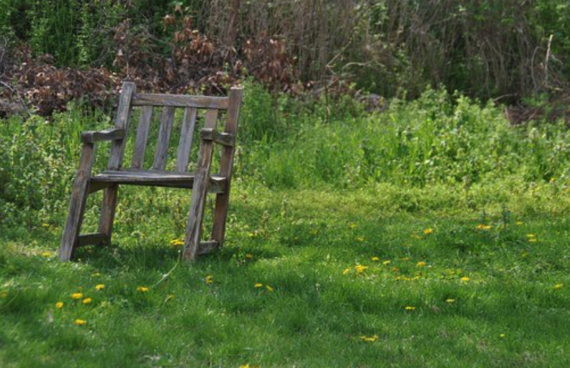
Part of me almost immediately shut down; it took effort to leave the house and keep going. I felt a resistance to participating in life, to adapting to the new situation. In response to “working from home”, I became less motivated and found myself sitting aimlessly in my old garden chair in the sun more often. I noticed that I was less sharp, lost track of things, and was less able to plan. I went into digital “hiding” during Teams meetings, turned off my camera and microphone, and secretly went to get a cup of coffee. I felt like a “floating rubber boat” without a helmsman. I was surprised to experience myself this way.
Part of me reacted with denial, telling myself it wasn’t that bad, that I could still go to the city park, that I would still visit my mother. I wouldn’t let it get to me. But then I also noticed a physical urge to avoid things: those runners in the woods, I started going at increasingly earlier hours. And when a client unexpectedly appeared in my workspace instead of in “Teams”, I froze, unable to think. The “security guard” in me suddenly came to the fore. I couldn’t tune in and decided to end the conversation. We agreed to meet again a few days later, at an appropriate distance, but in open contact with the client. The situation was no different, but inside me, the “committed professional” had taken the wheel again.
Part of me wanted to take action in that first phase of the crisis, to familiarise myself with the new situation in order to regain a leading position. To master the situation, to take control. To hold meetings. To tackle the change head-on, to be “in charge” again as quickly as possible. But to be honest, I notice that this action-reaction woman has been largely “off” in recent months. Creative, new plans? Well, no. I didn’t expect that. Because I am a driven, creative person. Why didn’t I, like all those others on LinkedIn, come up with new good deeds? Why wasn’t I the first to launch new products? Isn’t my gift to get things going, to generate ideas? My strong “enthusiastic self” seems to have faded into the background! Interesting… these times of crisis.
What was your reaction in the first few weeks? And how did it develop after that? Do you also recognise different “Selves” as the weeks and months go by? And can you look at them with kindness and surprise? Are you allowed to be who you are and can you acknowledge all aspects of yourself with self-love? So that you can relax?
Because know this, if you do not acknowledge your “selves” with love, you can become tense, and that usually does not lead to anything good. Which is what happened to me. I was disappointed in myself because I did not take enough action. As a result, I was no longer allowed to sit in the garden chair, I became exhausted from Zoom, I felt myself becoming gloomy and I became increasingly panicky around runners. I didn’t dare buy fresh beans anymore, and then I didn’t dare buy bread either. I got angry with myself and quicker to get angry with others. Not paying enough attention to my vulnerability in this new situation led to tension. I had to be careful!
Fortunately, I can guide myself a little. Kindness gives me breathing space and relaxation. My shopping and my mood are fine now.
Talent
Good. However your “Selves” react in times of stress, be positively curious about it. Because there is something else noticeable here too. If you relax a little in this new world, your essence, your spirit, will stir. Your talent also wants to relate to this new world.
When we are thrown out of our habitual lives, as we are now by this crisis, Talent will be interested in entering this new world. The upheaval of change even creates more space for this. Talent will show itself and make itself heard, it will manifest itself. The walls of habitual self, or your “Primary Selves” in terms of Voice Dialogue, have temporarily fallen away or have at least become diffuse. This brings vulnerability and freedom.
In a situation of change, despite the discomfort, people are also more receptive to developing self-knowledge, they long more to shape themselves from their true nature and they are more in touch with lost parts of themselves. They can tune in to themselves more easily and are more open to the “call” of talent.
What do you see in your colleagues? What strength, beauty and talents do you see shining through in this crisis? How is the role or tasks being filled becoming even more personal? With more individuality? Where do you see passion awakening, despite or because of this crisis? Take a look at your loved ones with this perspective, do you see change? Practise this talent-oriented way of looking.
Your talent has probably also been stirring in recent months and has manifested itself. Have you noticed it? What did you suddenly start doing that you enjoyed, that made you happy, that you may have previously hidden away or not given time or attention to, or that did not fit in with your usual way of doing things? What else has undoubtedly manifested itself in recent months, besides the primary responses to the crisis? What stood out, perhaps in the midst of your primary reflexes of responding? What was released? Which essential quality of yours was given space?
What made me jump out of my chair was sending genuinely sincere “how are you” emails to my clients and some of my clients, writing a few corona poems. Going for walks with my dog in places I normally never go. And above all: feeling a warmer sense of care for my clients. My ability to connect became sharper, clearer, conversations became deeper. I let go of my structures of guidance. My clients and I came to wonderful insights about life and destiny. I felt sadness over the city. I felt my vulnerability. I thought about the soul.
I write. I love people more. Life feels fragile and light at the same time. It is who I “also” am and what now, thanks to the change, shines more strongly within me. The awareness of this makes me happy. The tempered passion and enthusiasm create more space for my quiet, moved heart.
Text: Dinja van Gestel,
director and consultant at the Breda branch of Van Ede & Partners